Blog
What Houses Built Between 1971 and 2004 Mean for Your Door
Most Joplin homes went up between 1971 and 2004, peaking in the 1980s and 90s - that stock brings specific opener wiring and spring problems in cold winters.
The Common Mistake
The mistake we see most in this area is treating a garage door like it's timeless. It isn't. Most houses across the Joplin service area went up between 1971 and 2004, with the heaviest building years landing in the 1980s and 90s, spread across the fourteen named areas we work in. A door and opener installed when a house was framed is now somewhere between twenty and fifty years old, and a lot of homeowners never think about it again until it quits working.
The specific trap is assuming a quiet door is a healthy door. Torsion springs from that era were rated for a set number of cycles, and that number runs out whether or not anyone noticed a problem. Openers from the 1980s and 90s often used chain drives and control boards that nobody manufactures parts for anymore. When one of those boards fails, you're not looking at a quick swap - you're looking at a full opener replacement, because the matching part doesn't exist on a shelf. Owners who assume otherwise usually find out when the door won't open at all, not before.
The Problem
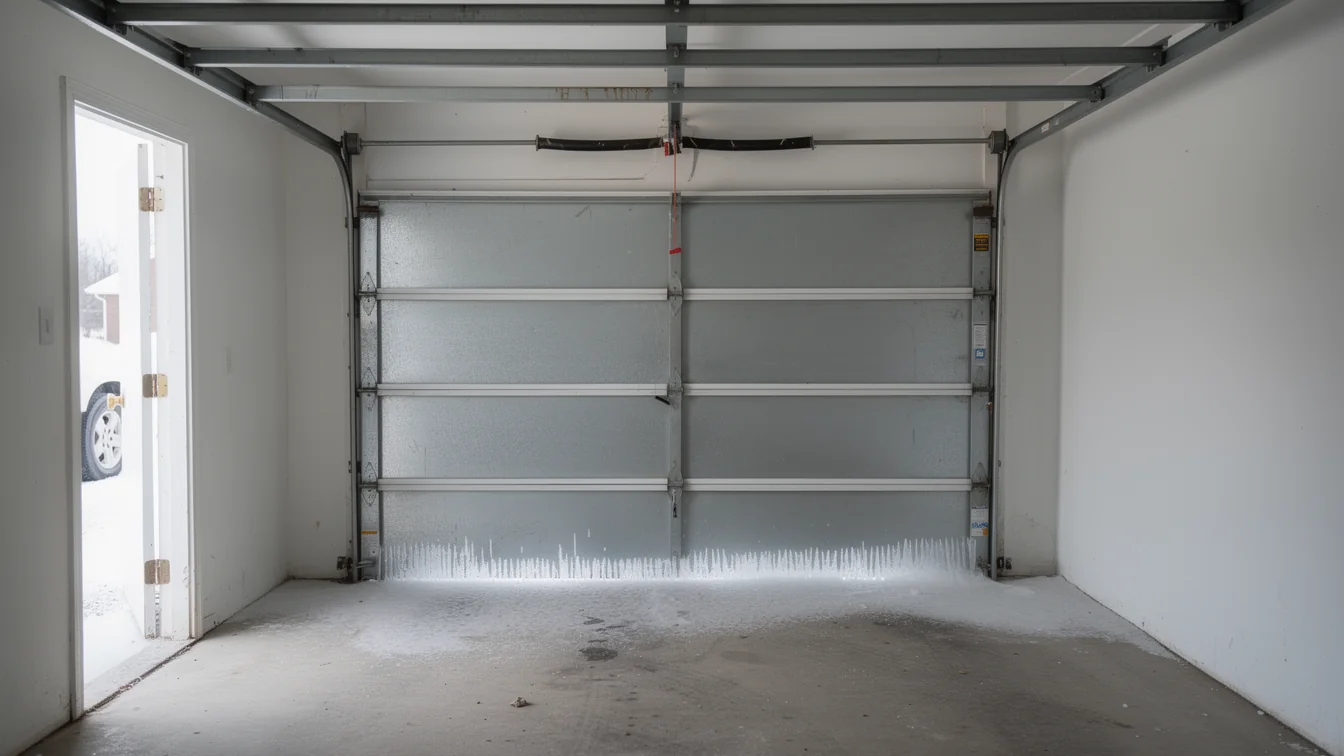
This area sits in a cold-moderate climate band, which means real winter stress on a garage door system every year, not just an occasional cold snap. That matters more on houses from the 1971-2004 wave because a lot of the original steel doors installed during that stretch were single-layer, with no foam core and no thermal break. Cold steel contracts, torsion springs lose a little tension as the metal stiffens, and the grease in an original hinge or roller thickens up and stops doing its job.
None of that is dramatic on its own. The problem is what it does over repeated winters: a spring that's already near the end of its rated cycles breaks on a cold morning instead of a mild one, because the extra load from stiff, cold steel is the push that finishes it off. Rollers that were marginal in October seize by January. It's not that these doors are badly built - most were built to the standard code of their decade - it's that the decade in question is now old enough that the standard parts are worn out at the same time the climate is working against them.
What Local Conditions Do
Put the two facts together - 1980s-90s builds, cold-moderate winters - and you get a predictable pattern across the 14 areas we see, not a random one. Original torsion springs on doors from that era are reaching or past their rated cycle count right around the same years that winter stiffening does the most damage, so failures cluster in the colder months. Garages that were never insulated as part of the original build stay close to outdoor temperature, so the door, opener, and hardware inside them age on the same clock as if they sat outside.
Households in this area skew toward owner-occupied single-family homes - 13,385 of them across roughly 24,336 households total - and a lot of them are sitting on that same 1971-2004 stock. That's why when we go out on a cold-weather call, it's rarely an isolated oddity. It's usually the same combination: original spring, original hinges, unconditioned garage, and a winter that finally asked more of the hardware than it had left to give.
When to Get Help
Call before the door fails all the way, not after. If a door from the 1971-2004 era is making a grinding noise on the way up, visibly sagging on one side, or needs a shove to get moving in cold weather, that's the spring or the rollers telling you they're near the end, not a lubrication problem you can fix with a can of spray. An opener from the 1980s or 90s that trips the breaker, reverses for no reason, or has a control board nobody can source anymore is usually cheaper to replace outright than to keep chasing part by part.
One honest limit: if your opener is old enough that the manufacturer no longer makes the logic board, we're not going to pretend we can special-order one - that part doesn't exist, and we'll tell you that on the call instead of stringing out a repair that won't hold. For a sagging panel or a broken torsion spring, though, those are straightforward jobs, and worth a call before a cold morning turns a stiff door into a door that won't move at all.
Questions
Common questions
Why do garage door springs seem to break more in winter here?
Cold steel stiffens, and torsion springs that are already near the end of their rated cycle count take extra load from that stiffness. On houses built in the 1971-2004 wave, which is most of the area, that spring is often original and already close to worn out, so a cold morning is often the final push, not the cause on its own.
My opener is from the 1980s - can it still be repaired?
Sometimes, but control boards for openers that old are often no longer manufactured. If the board itself has failed, replacement of the opener is usually the realistic option rather than a repair, since there's no matching part to source.
Do you work outside Joplin itself?
Yes. We cover the surrounding area including Duquesne, Leawood, Airport Drive, Webb City, Duenweg, Carterville, Carl Junction, Loma Linda, Oronogo, Carthage, Diamond, Neosho, Granby, and Seneca, ranging from about 2 miles out to roughly 17 miles.
Is it worth insulating an original garage door from this era?
Depends on the door's condition. If the panels, rollers, and springs are otherwise sound, adding a foam-core replacement door can help with temperature swings in an unconditioned garage. If the door is also near end of life mechanically, replacement usually makes more sense than insulating the old one.
Recommendation
You Might Also Like
More garage door guides for Joplin homeowners.
 What That Noise Is Actually Telling You
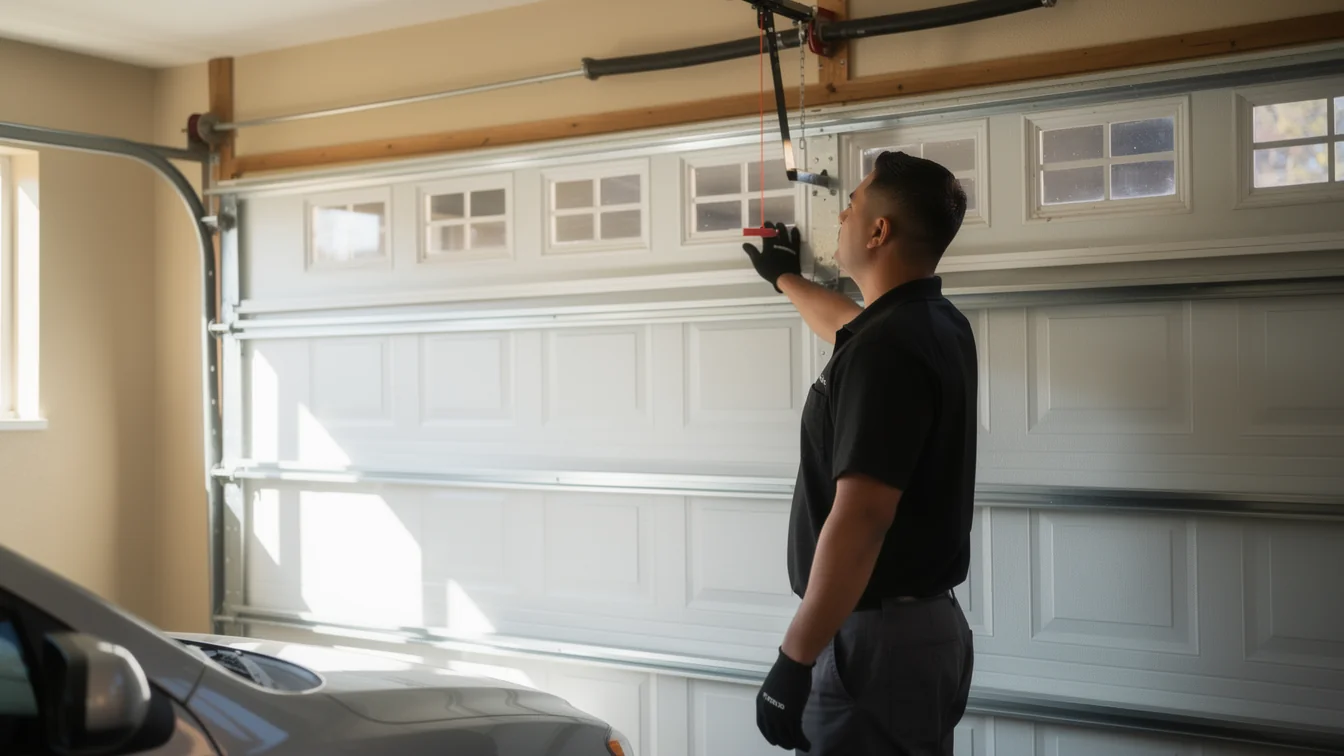
Joplin homes built mostly between 1971 and 2004 develop specific noise patterns as original hardware ages.
 What Actually Happens During a Service Call in Joplin
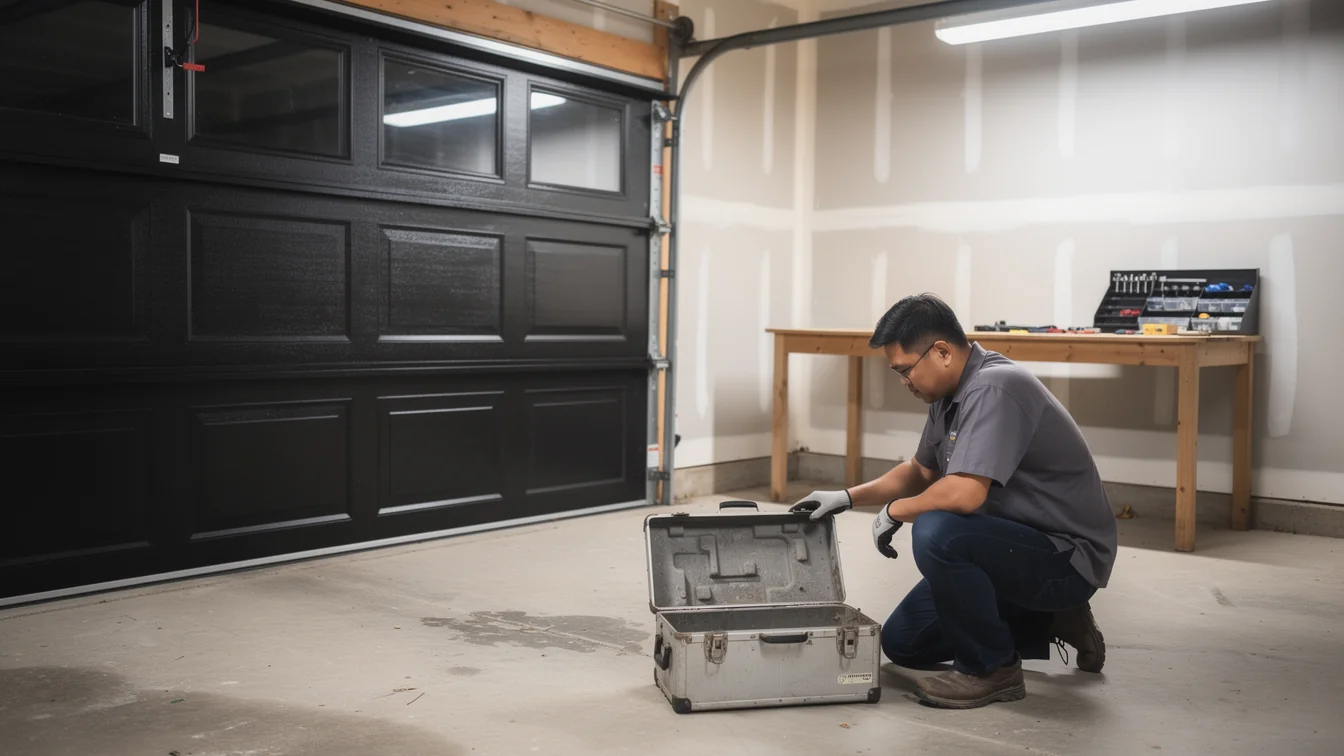
A look at what a Joplin Garage Door Pros service call includes, built around the 1971-2004 housing stock and cold-moderate winters common across the Joplin area.
 When Your Opener Meets a Joplin Power Cut
Joplin homes built mostly in the 1980s and 90s pair aging openers with winter power cuts.
Ready when you are
Need a garage door sorted in Joplin?
Joplin Garage Door Pros repairs and installs garage doors, springs and openers in Joplin, MO and the surrounding area.