Blog
Why Joplin Garage Doors Fail When It Gets Cold
Joplin homes built 1971-2004 run original torsion springs that weren't sized for repeat freeze-thaw cycles. Here's what actually breaks and when to call.
The Common Mistake
Most homeowners in this part of Missouri figure a dead garage door in January is just bad luck. It isn't. The housing stock out here runs mostly 1971 to 2004, with a median build year around 1984, and that generation of door came with a torsion spring sized for the opener and door weight of its decade - not for thirty-plus winters of steel contracting and expanding. The mistake is treating a slow, stiff door in November as a lubrication problem and waiting until it snaps in a hard freeze. By the time the spring actually breaks, the cable and drum have usually been taking extra load for weeks, and that's a bigger bill than the spring alone. If your door has felt heavier to lift by hand since fall set in, that's the spring telling you something, not the weather alone.
The other common mistake is assuming every door in the area ages the same way. It doesn't - a door on a house built in the early '70s is a different animal than one in a 1990s build, even on the same street.
The Problem
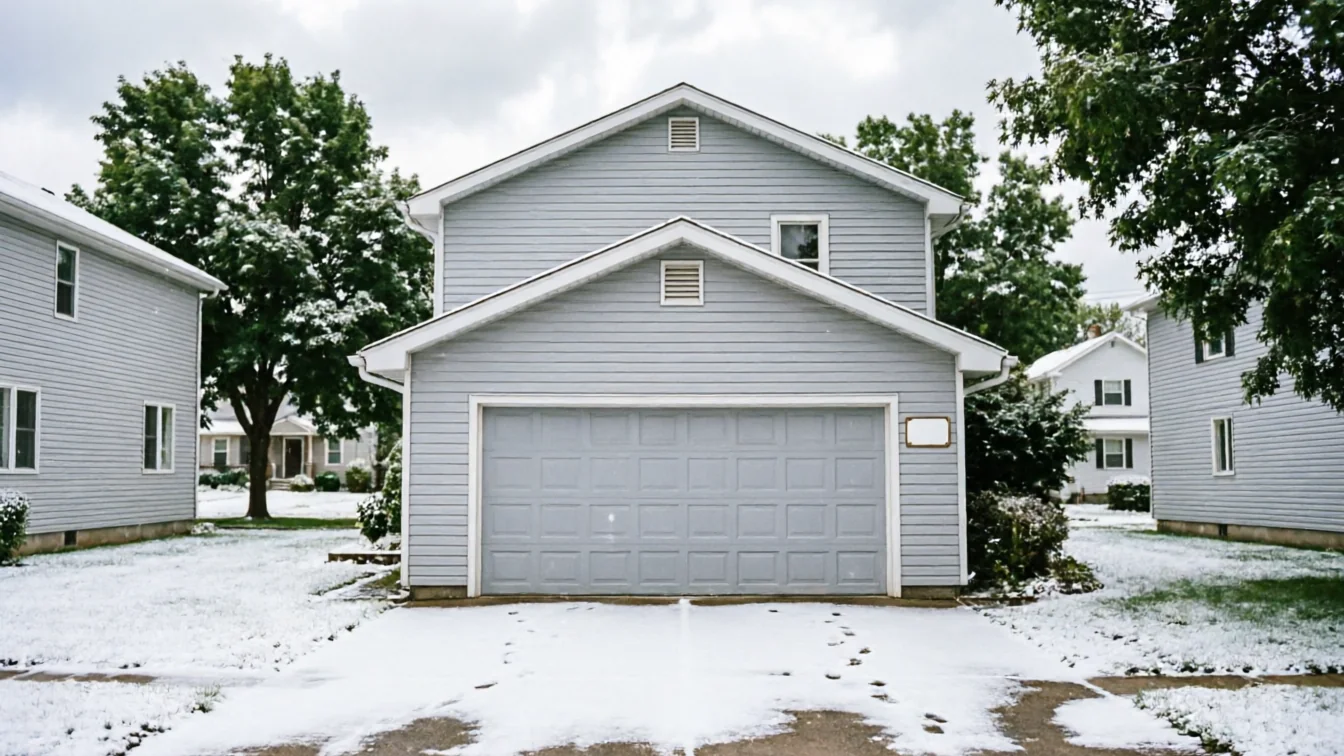
Across the service area - Duquesne, Leawood, the Airport Drive corridor, Webb City, Duenweg, Carterville, Carl Junction, Loma Linda, Oronogo, Carthage, Diamond, Neosho, Granby, and Seneca - the housing is overwhelmingly 1980s and '90s stock. That means a huge share of doors in this region are running original or first-replacement torsion springs that are now 20 to 40 years into a part rated for roughly 10,000 cycles. Steel spring wire gets more brittle as temperatures drop, and this is a cold-moderate climate band - not the Gulf Coast, not the northern plains, but enough hard freeze nights every winter to matter. A spring that's been slowly losing tension for a decade will often hold through summer and let go on the first real cold snap, because cold steel has less give left in it right when the door is heaviest to lift.
The practical problem for homeowners: a spring failure doesn't announce itself ahead of time with a noise you'll notice. It goes from "a little stiff" to "will not open" in the space of one cold morning.
What Local Conditions Do
Cold doesn't just affect springs. It tightens steel tracks and shrinks the rubber seal at the bottom of the door, which on a lot of these 1980s and '90s builds was never replaced and has already hardened with age. When the seal hardens and the track contracts slightly, a door that used to roll smoothly starts binding at the rollers - and a binding door puts side-load on a spring that's already working harder in the cold. It's a chain reaction, not one single failure.
On the older end of the local housing - anything from the early 1970s through early '80s - openers and hardware are more likely to still be original or one replacement in, which means parts and mounting styles that newer stock across the same area won't have. That matters for diagnosis: a torsion spring on a 1975 house and one on a 1998 house in the same neighborhood can be different sizes and wind directions, so there's no universal fix to describe here, only a correct one for your specific door.
When to Get Help
Call before the spring breaks if the door has gotten noticeably heavier to lift by hand, or if it starts and stops jerky partway up - that's usually the spring losing tension, and replacing it before it snaps is a controlled job instead of an emergency one. Once a spring does break, the door is unsafe to operate manually and shouldn't be forced with the opener either; that's when it's a same-day call, not a wait-and-see.
One honest limitation: if your opener and spring setup is original to a house built before the mid-1970s, parts matching that exact hardware aren't always something we can get quickly, and in some cases full replacement with current hardware is the faster and more sensible path than hunting down an obsolete match. We'll tell you straight which one applies before any work starts.
Questions
Common questions
Why did my spring break in cold weather and not during the summer?
Steel loses a bit of flexibility as it gets colder, and a spring that's already near the end of its life has less margin left to absorb that. It often holds through warm months on fumes and lets go on the first hard freeze, when the door is also heaviest to lift.
Is my door's hardware different because of when my house was built?
Likely yes. Housing in this area runs mostly 1971 to 2004, with a lot concentrated in the 1980s and '90s. Spring size, wind direction, and mounting style vary by build era, so a door from the early '70s often needs a different part than a 1990s door nearby.
Can I just lubricate a stiff door instead of replacing the spring?
Lubrication helps the rollers and hinges, but it won't restore tension to a worn spring. If the door feels heavier to lift than it used to, that's a tension problem, not a friction problem, and oil won't fix it.
Recommendation
You Might Also Like
More garage door guides for Joplin homeowners.
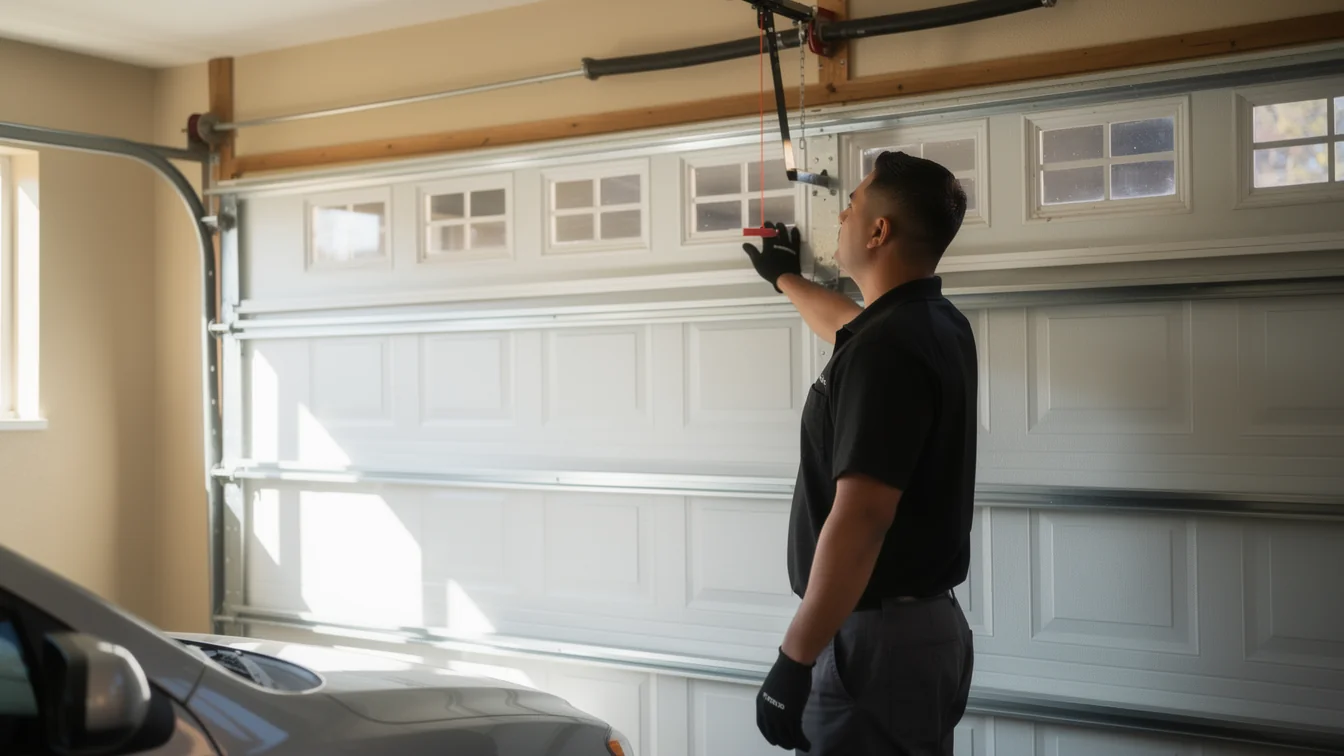 What That Noise Is Actually Telling You
Joplin homes built mostly between 1971 and 2004 develop specific noise patterns as original hardware ages.
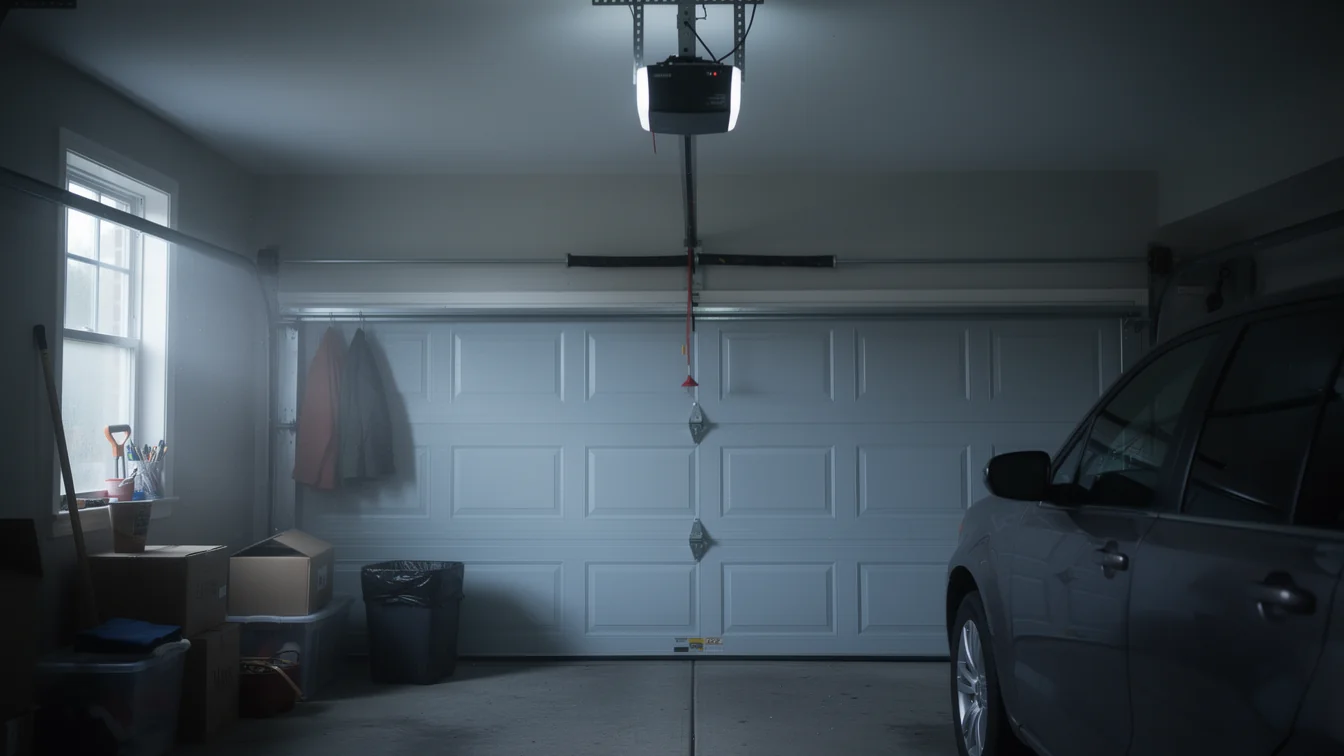 When Your Opener Meets a Joplin Power Cut
Joplin homes built mostly in the 1980s and 90s pair aging openers with winter power cuts.
 What Actually Happens During a Service Call in Joplin
A look at what a Joplin Garage Door Pros service call includes, built around the 1971-2004 housing stock and cold-moderate winters common across the Joplin area.
Ready when you are
Need a garage door sorted in Joplin?
Joplin Garage Door Pros repairs and installs garage doors, springs and openers in Joplin, MO and the surrounding area.